Research · the paper this run produced
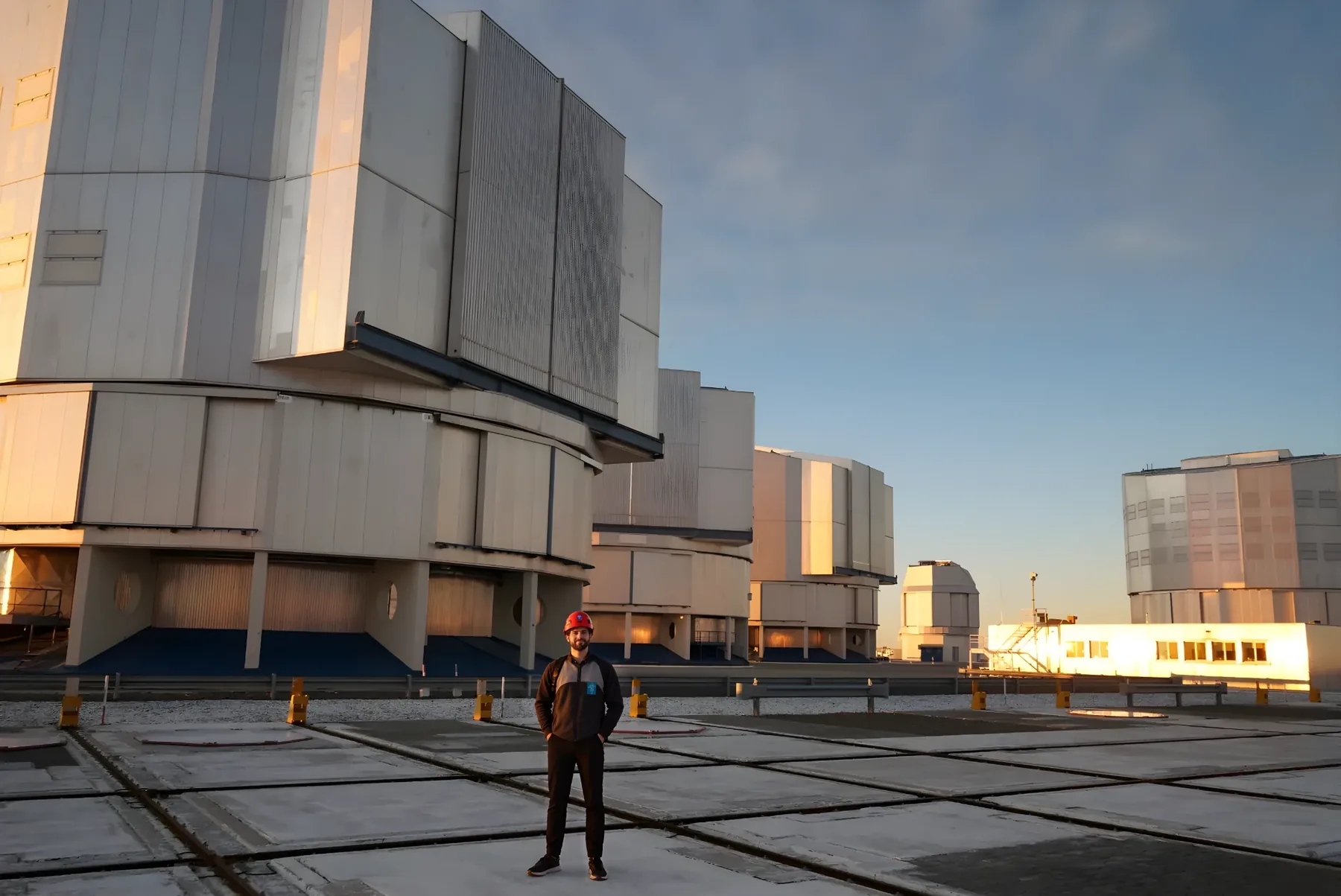
observing Paranal, Chile · May 2024
Observing at the Very Large Telescope
In May 2024 I was the visiting observer at Paranal for an ESPRESSO campaign on the star GJ 570 A, part of Tiago L. Campante's programme, to measure oscillations in a cool dwarf star.
What the campaign was for
Stars oscillate. Gas churning below the surface drives sound waves through the interior, and the pitches of the tones reveal a star's mass, radius and age. This is asteroseismology. In stars like the Sun it is routine, but in K dwarfs, which are smaller and cooler, the surface moves by only a few centimetres per second, and space telescopes that watch brightness have caught the effect in very few of them.
A spectrograph can look for the same oscillation as a Doppler shift, the surface moving towards and away from us. ESPRESSO, on the Very Large Telescope, is stable enough to see shifts that small. GJ 570 A is a nearby K dwarf bright enough for 25-second exposures. How strongly such a star oscillates tests our models of convection, and it tells the PLATO mission what it can expect from stars of this kind.
What I did
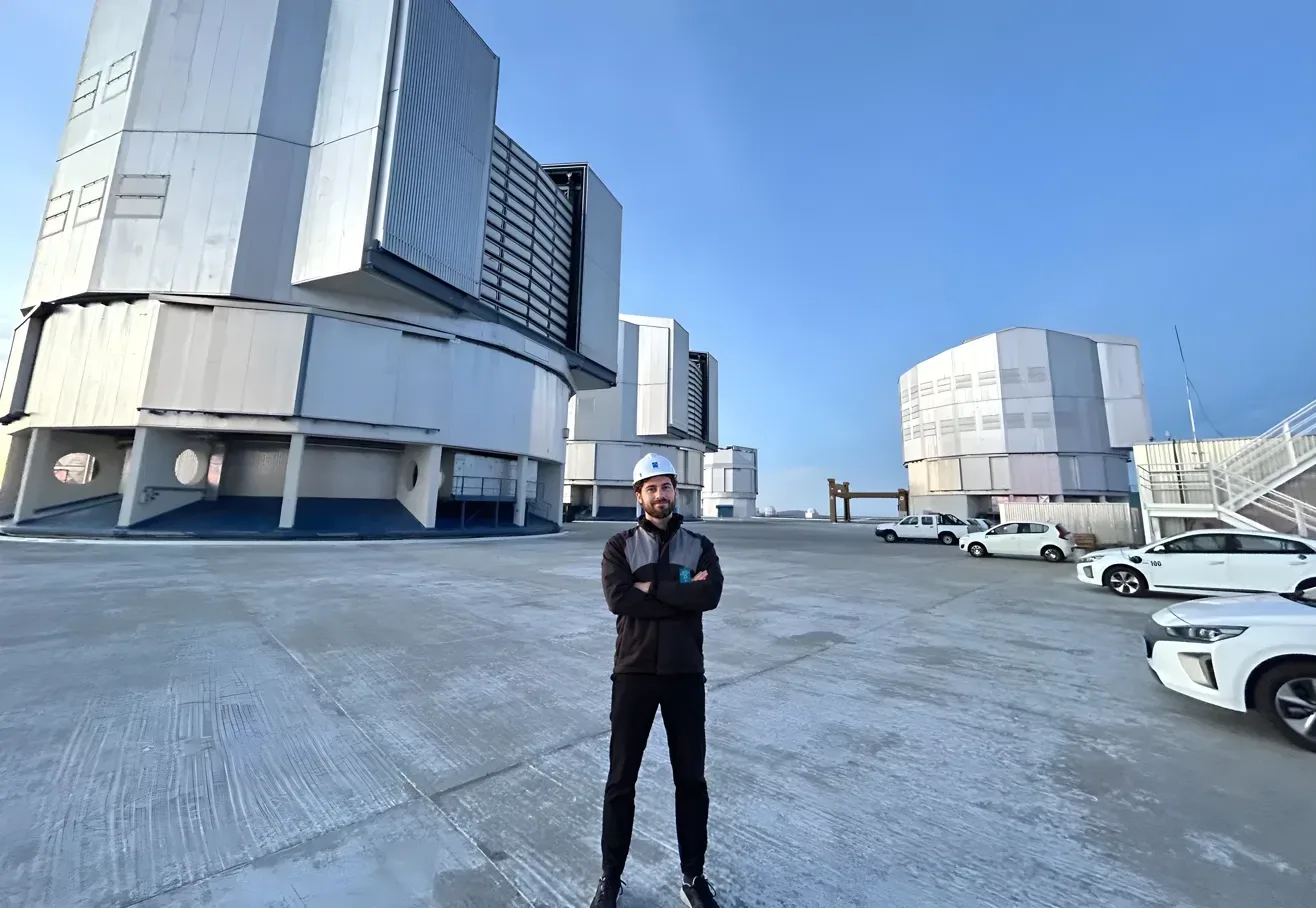
Visitor mode means the observer travels to the telescope and runs the observations on site, alongside ESO's staff. The programme was Tiago Campante's, and I was the observer at Paranal for GJ 570 A, from 4 May 2024, with six scheduled nights from 6 to 12 May.
Each night the aim was a continuous series of short exposures of one star, about one a minute, so that the oscillations could be followed without gaps. Wind and cloud kept the dome closed on the first night and for half of the fourth, so the series that went into the analysis comes from the remaining nights.
What came of it
GJ 570 A does oscillate, with periods of three to four minutes, but at only about a sixth of the Sun's strength. Together with a second K dwarf observed in September 2024, it shows that small, cool stars oscillate more weakly than the rule for Sun-like stars predicts, and current 3D simulations of their outer layers do not reproduce the drop.
The results are in Campante et al. 2026, published in Astronomy and Astrophysics, where I am sixth of 24 authors and credited with the GJ 570 A observations. The plain-language explainer is here.
From the run
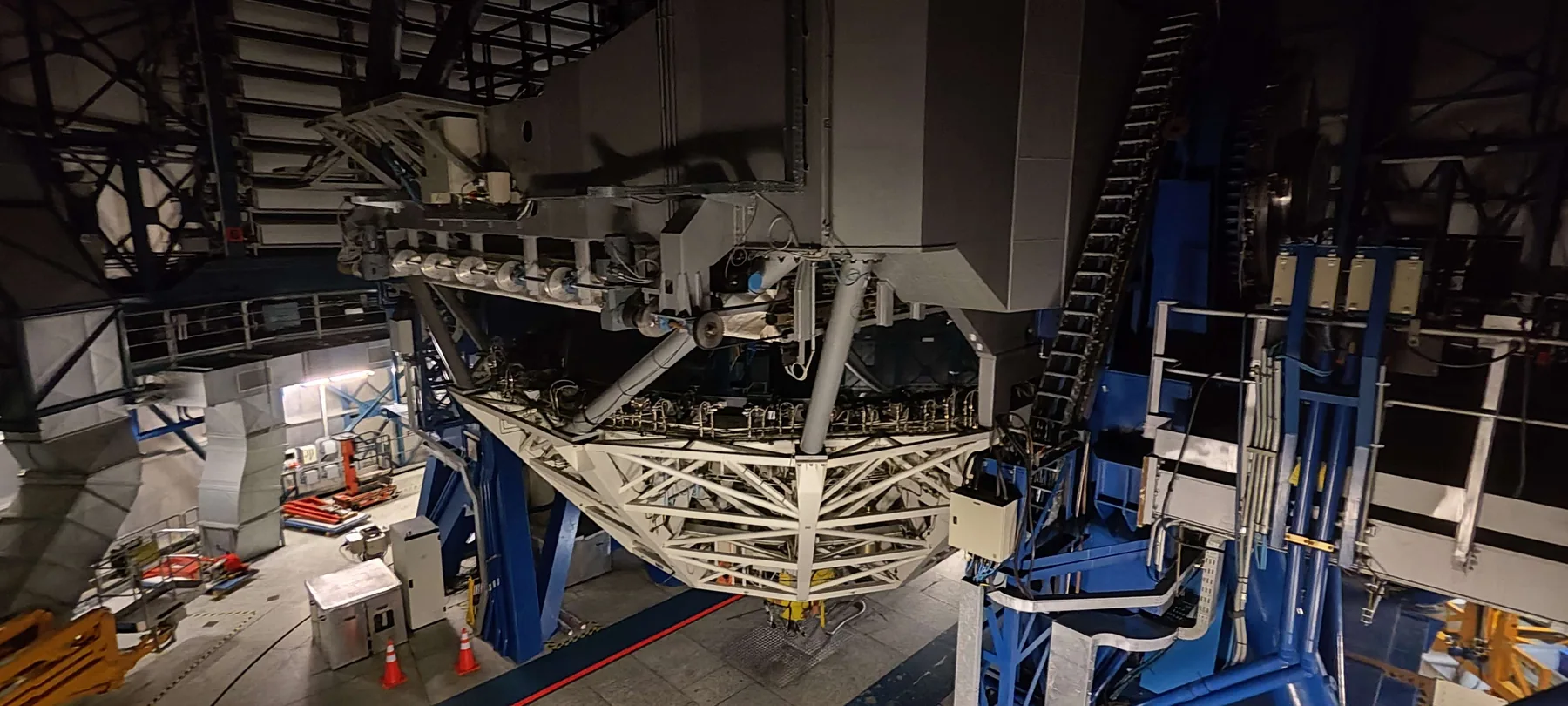
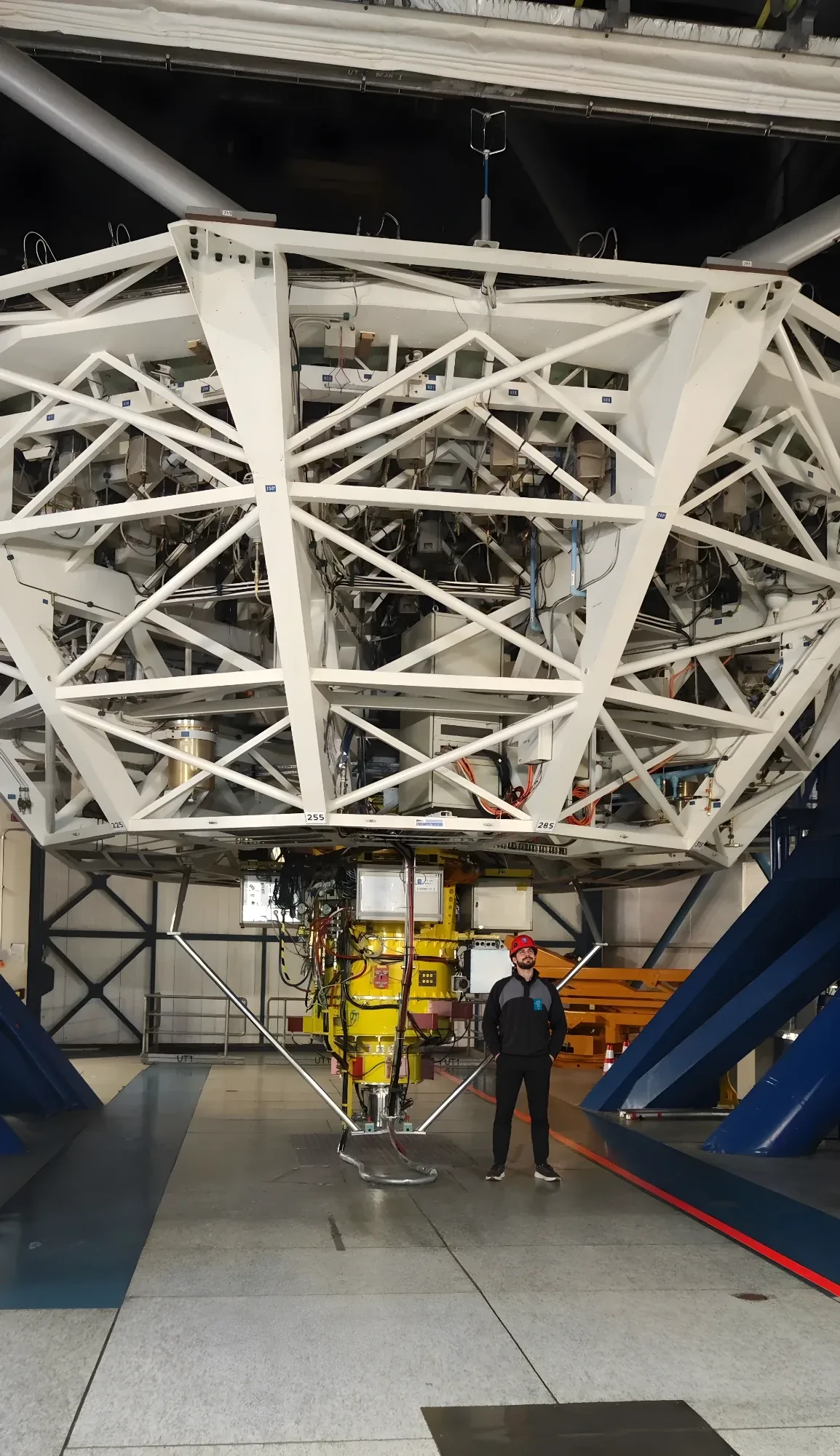
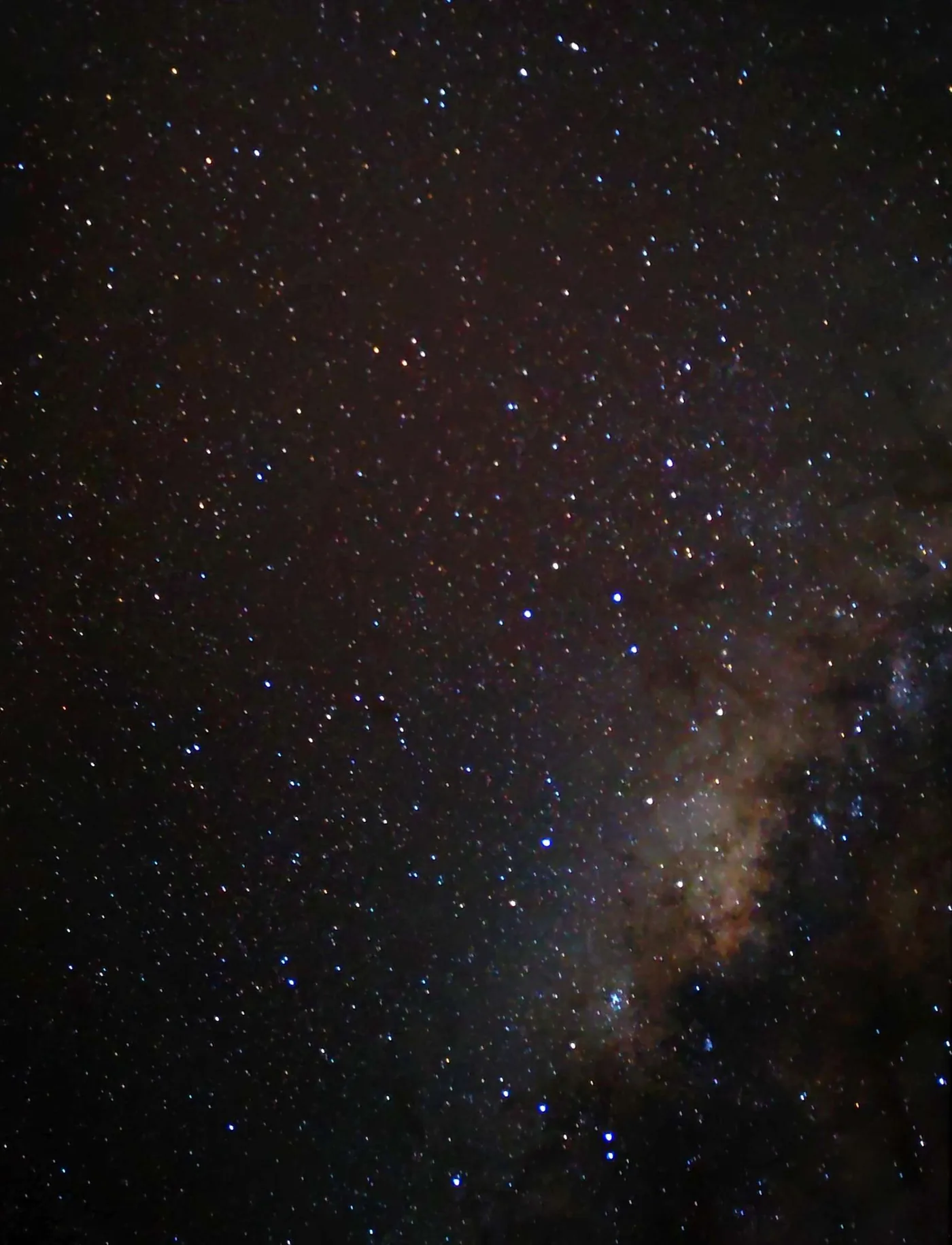
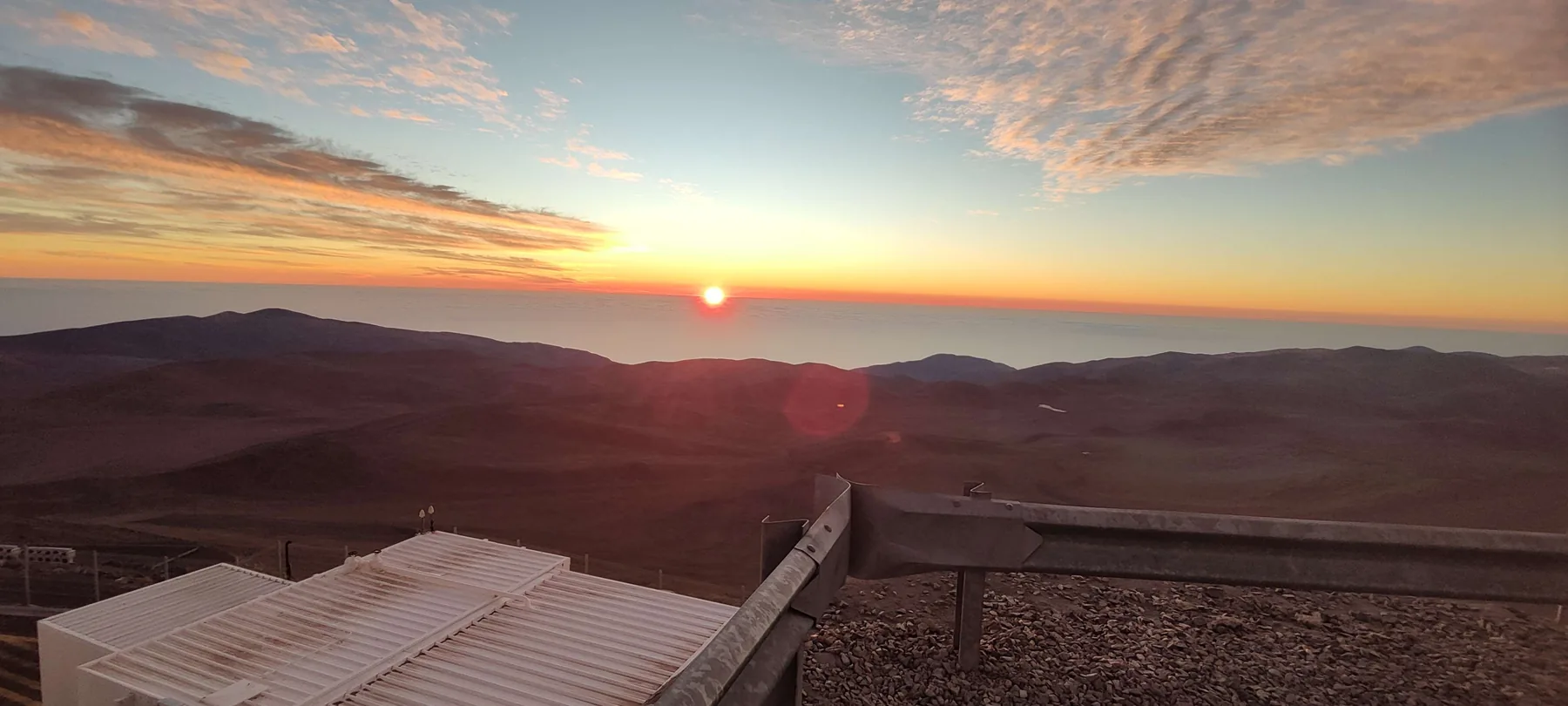
Photographs from my May 2024 stay at Paranal.
More context: what ESO and the VLT are, and what asteroseismology measures.